Back
Headless Multi Brand Design System
Created a shared headless design system enabling multiple brands to ship apps quickly while maintaining brand differences.

Role
UX & UI Designer
Team
Head of product design, senior designers, PMs, lead developer
Timeline
3 months
Company
Gap Inc
Scope
UX & UI Designer
Goal
Head of product design, senior designers, PMs, lead developer
Project Context
We were tasked with delivering the web and app experiences for three brands, Gap, Athleta, and Banana Republic, within three months, including localized Arabic designs. Each brand had unique styling rules, but most components and flows were consistent across brands.
The challenge was how to avoid duplicating work across brands while maintaining fidelity to global designs and accommodating regional differences such as delivery, pickup, and local BNPL options.
Add image suggestion: Visual showing the three brands side by side with their unique characteristics
Problem to Opportunity
Before this project:
Each brand had its own design files and components, causing redundant work across the design team
Tight deadlines and multiple brands caused slow design and development cycles
Cross-brand inconsistencies created potential QA issues, especially with spacing, typography, and component styling
No system existed to switch brand variables dynamically while preserving component behavior
Opportunity. Build a headless design system that could:
Support multiple brands via shared components and variable overrides
Speed up design and development for future campaigns or feature updates
Ensure consistency and reduce QA back-and-forth
Maintain the premium look of each brand while respecting global design guidelines
Add image suggestion: Flow diagram showing repeated effort before system and single system workflow after
Starting with an Audit
Conducted a UI and UX audit of all existing brand apps and web platforms
Analyzed individual brand systems, including variable-driven breakpoints
Reviewed Tailwind CSS for reference on variable-driven design
Created system-level documentation including atomic components, tokens, and variants
Insights:
Most UI components were consistent across brands but required different styling variables such as color, typography, border radius, and spacing
Brand-specific quirks, such as Gap never using bold fonts and Athleta having more rounded buttons, required flexible, override-friendly components
Add image suggestion: Screenshot or table showing component variations between brands
Biggest Challenges.
Maintaining brand fidelity while sharing components
Defining brand-specific variables for typography, spacing, and radius
Supporting headless CMS and multi-brand swaps without redesigning components
Meeting tight timelines, three months for web and app including Arabic designs
Add image suggestion: UX challenge diagram highlighting multi-brand, headless, and localization constraints
Product Thinking & Design Decisions
Component Structure for Headless Use
Atomic components such as buttons, inputs, cards, forms, modals, navigation, headers, and footers
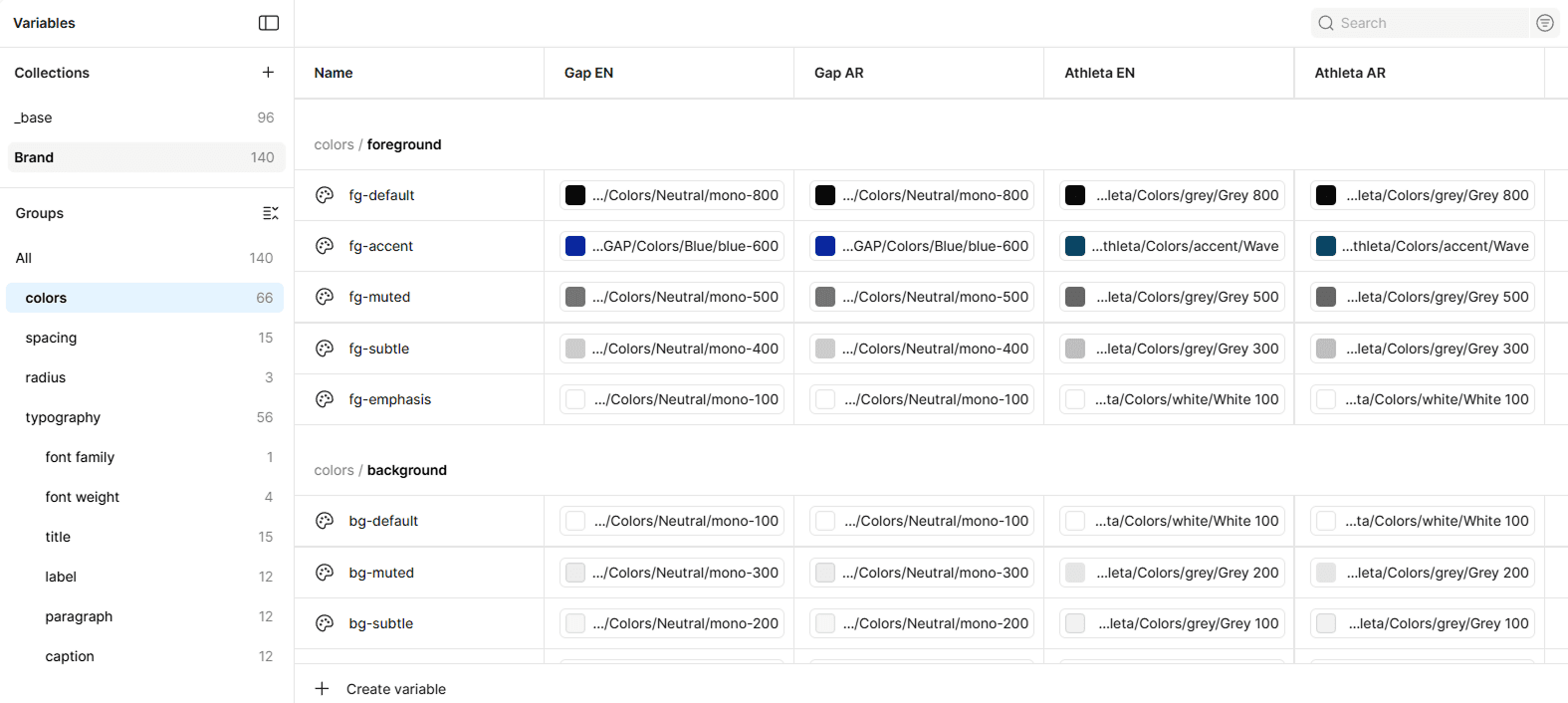
Design tokens for base variables such as colors, typography, spacing, and radius grouped by category
Brand overrides applied at page or component level
Variants for buttons, inputs, and containers to accommodate different brand rules
Brand-Specific Decisions
Defined different radii grouped into buttons, inputs, and containers for Gap and Athleta
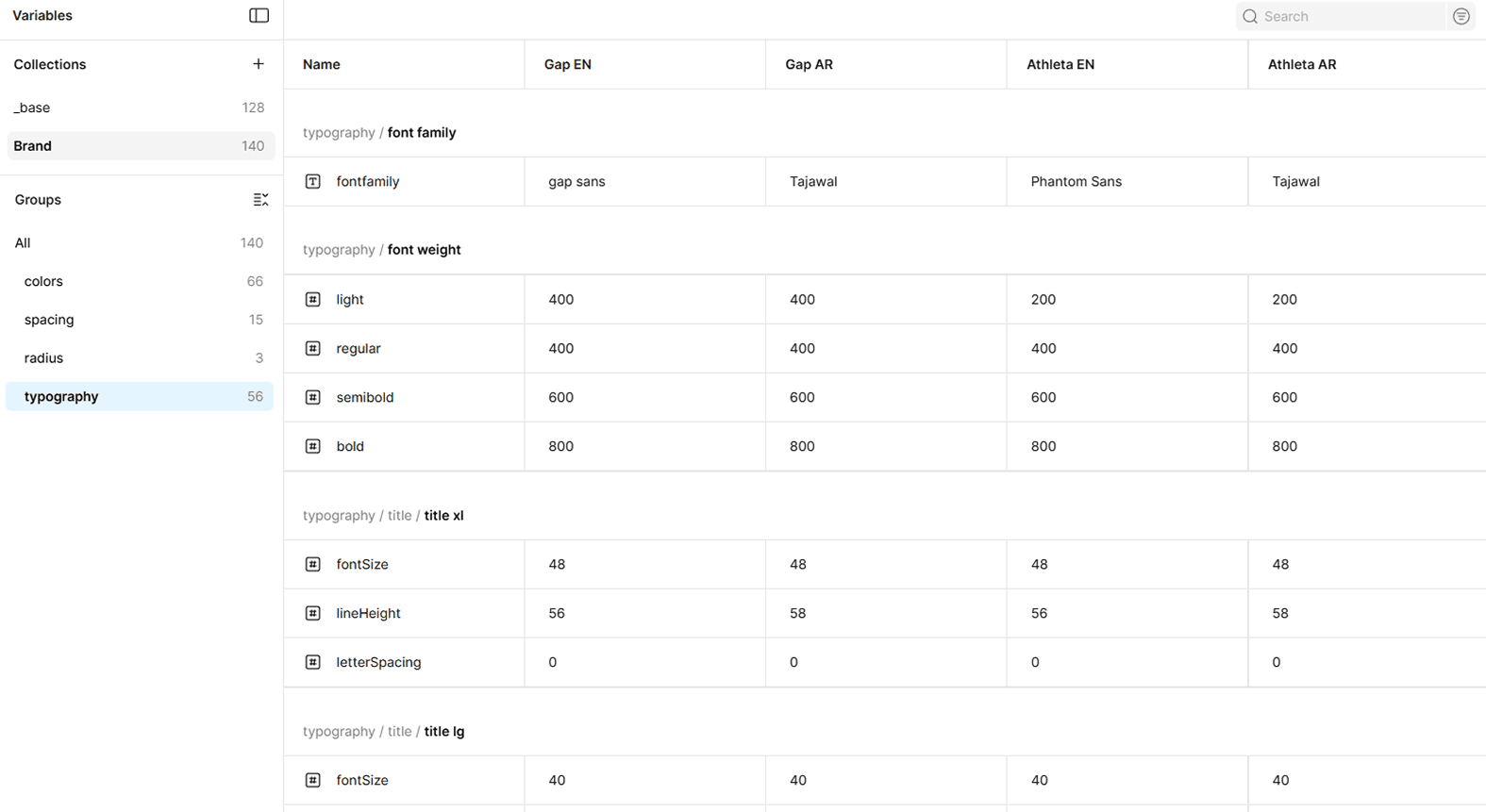
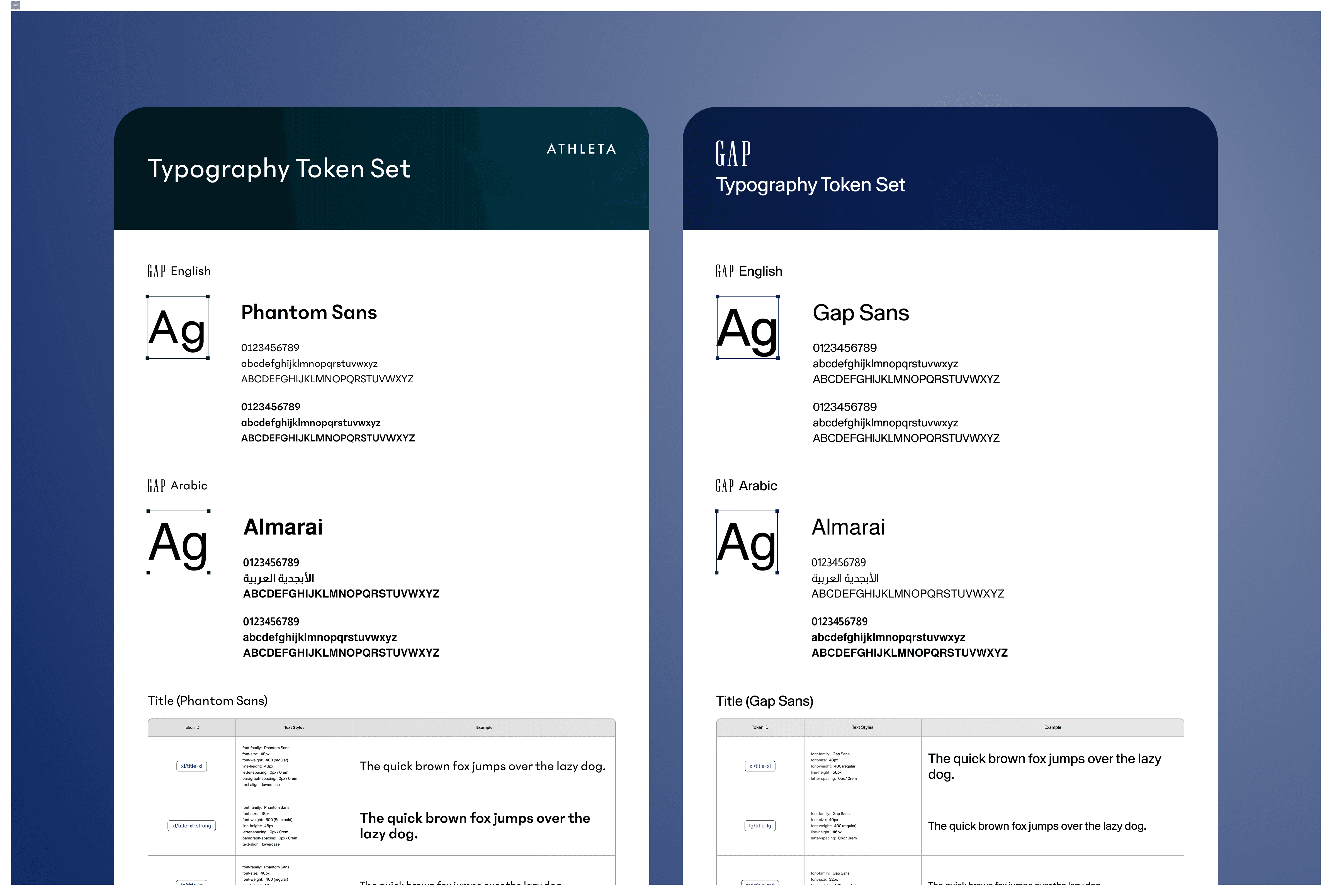
Gap had no bold font usage, so we created font styles and weights to preserve bold where needed for Athleta while switching brands
Ensured spacing, hierarchy, and clarity of information were consistent across brands
Process and Documentation
Created detailed guidelines for developers and PMs, making ticket writing easier
Reduced back-and-forth during implementation
Documentation included component usage, variable mapping, and cross-brand overrides
Add image suggestions:
Atomic component examples
Token map or variable hierarchy diagram
Button variants for Gap and Athleta
UX Challenges
Brand differences, rounded corners for Athleta versus zero radius for Gap
Typography, bold text applied only for Athleta while preserving Gap style
Timeline pressure, delivering multiple brands and Arabic localization in three months
Add image suggestion: Side-by-side comparison of buttons and typography for Gap and Athleta
Design Highlights
Buttons: Primary, secondary, and tertiary with brand overrides
Cards: Product cards, content cards, and banners
Forms: Inputs, selects, checkboxes, and radio buttons
Navigation: Mobile bottom nav, headers, and footers
Modals and popups: Alerts, promotions, and onboarding
Tokens and variables: Colors, typography, spacing, and radius
Add image suggestion: Annotated component gallery showing usage and variants
Impact
Design velocity improved because designers could reuse components across brands
Feature rollout speed increased as developers reused components with brand overrides, reducing duplication
Cross-brand consistency ensured visual coherence across Gap, Athleta, and Banana Republic
QA errors reduced, especially in spacing and styling
Developers noted clearer information and PMs praised detailed documentation, reducing back-and-forth
Add image suggestion: Before and after workflow diagram showing QA reduction
Looking back…
What Worked Well
Shared atomic components and variable-driven system enabled multi-brand efficiency
Detailed documentation reduced implementation errors
Brand fidelity maintained despite shared system
Future Improvements
Expand system to additional brands beyond the three initial ones
Extend breakpoints to tablet and desktop
Add accessibility tokens and guidelines for dark mode
Introduce component library in Figma or Storybook for easier collaboration
Explore dynamic layout adjustments for Arabic versus English layouts
Add image suggestion: Concept mockup for extended breakpoints or new brand