
Back
Designing an Omnichannel Gift Registry for Tanagra
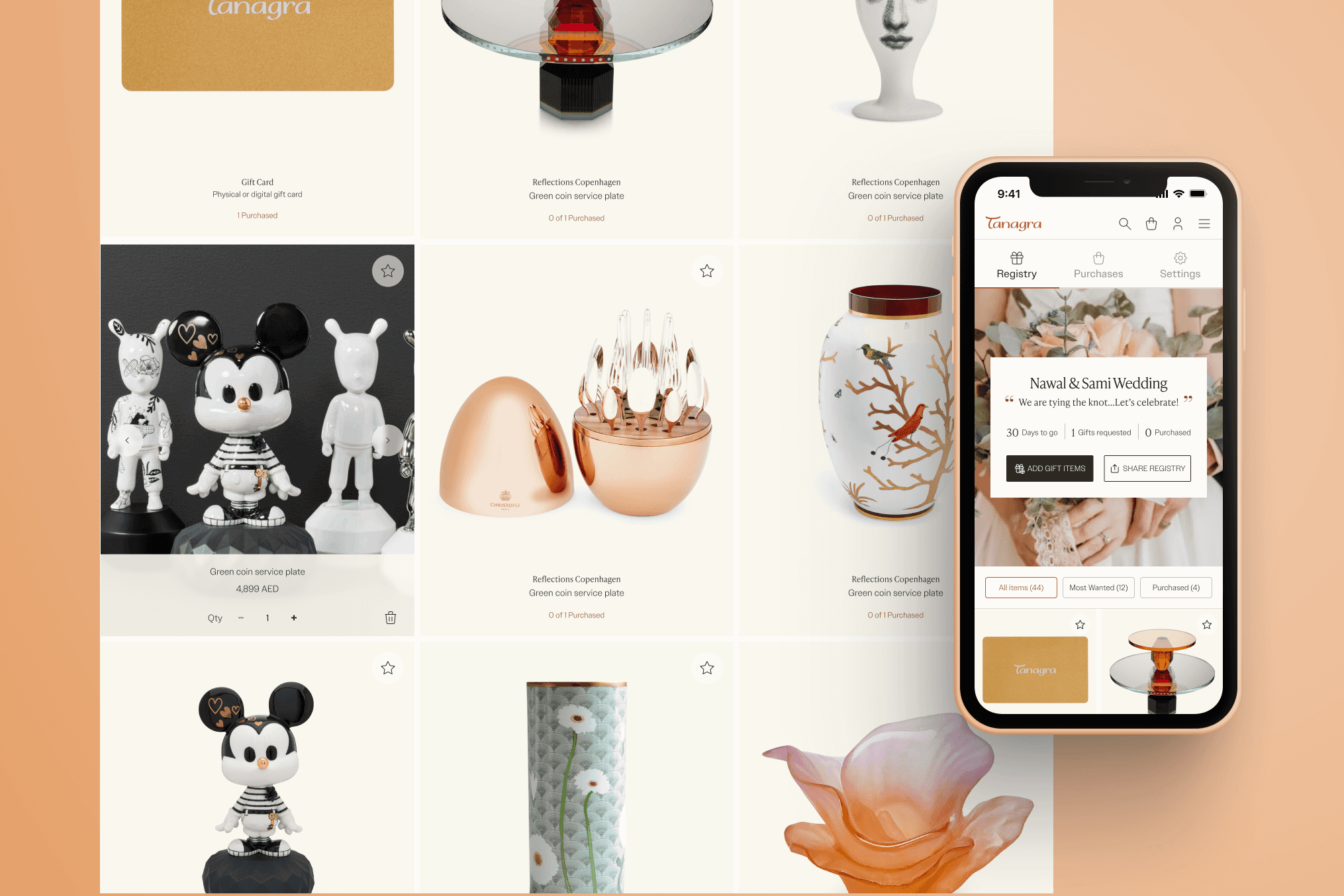
Designed a digital gift registry allowing customers to curate products for weddings and events and share them with guests.

Role
UX & UI Designer
Team
Product manager, developers, business analyst, senior designer
Timeline
Project within ecommerce roadmap
Company
Tanagra
Scope
UX & UI Designer
Goal
Product manager, developers, business analyst, senior designer
Project Context
Tanagra is a luxury gifting destination offering curated homeware, décor, and statement pieces through its digital platform and physical boutiques. Despite its premium offerings, Tanagra lacked a registry solution to capture gifting moments such as weddings, engagements, housewarmings, and other milestone celebrations.
The existing registry was outdated, rarely used, and limited in functionality. The goal of the project was to create a modern, omnichannel registry experience that could drive traffic, increase revenue, and strengthen Tanagra’s positioning in the luxury gifting market.
Add image suggestion: Old registry screenshot vs. Tanagra branding image.
The Problem
Customers had no simple way to curate preferred gifts from Tanagra’s catalog or organize items discovered in store with sales associates. Guests often struggled to choose meaningful gifts and risked purchasing duplicates.
While Tanagra provided a premium in-store shopping experience, there was no digital system to connect those interactions with an online registry that could be easily shared with friends and family. As a result, customers planning weddings and other celebrations were often pushed toward larger retailers that offered registry functionality, limiting Tanagra’s ability to participate in some of the most significant gifting occasions for its customers.
Add image suggestion: Diagram showing registry pain points for owners and guests.
Business Goals
Increase gifting-related revenue by capturing more purchases during weddings and milestone events
Drive new customer acquisition through registry guests
Increase site visits and engagement with Tanagra’s online platform
Position Tanagra as a premier destination for luxury gifting in the GCC
Add image suggestion: KPI mockup or metric visual.
Research
We conducted a multi-step research process to understand users and competitors.
We studied both regional and global players:
Amazon
The Knot
Zola
My Registry List
User Research:
Created personas for registry owners and gift buyers
Mapped two user journeys to understand pain points
Key insights:
Guests don’t know what to buy
Couples receive duplicate gifts
Users often do not know what they want on the spot, resulting in gifts they don’t need
Registry creation is too complicated
Registry creators want all gifts to arrive at the same time
Gift options for different budgets are limited
Add image suggestion: Personas, journey maps, and key insights visual.
Design Challenge
Designing a registry for Tanagra required balancing the needs of multiple user groups while maintaining the brand’s premium experience:
Multiple users: Registry owners need to curate and manage gifts, while guests need a simple purchasing flow
Omnichannel complexity: Customers discover products in store but may share or purchase gifts online
Luxury brand expectations: The registry needed to feel curated, elegant, and simple, not transactional or cluttered
Edge cases: Preventing duplicate purchases, handling item prioritization, and ensuring accessibility for older family members
Add image suggestion: UX challenge diagram highlighting user pain points and cross-channel considerations.
Product Decisions
Preventing Duplicate Gifts
Items automatically mark as purchased once a guest completes checkout
Temporary reservation during checkout prevents simultaneous duplicate purchases
Registry owners can rank items by priority, making it easier for guests to select desired gifts
Supporting Different Guest Budgets
Initially, we wanted group gifting (multiple guests contribute toward one high-value item), but this was out of scope due to development complexity
Instead, we introduced gift cards, allowing guests to contribute a specific monetary amount along with a personal message
Registry Management
Simple dashboard for owners to manage, edit, and track gifts
Notifications for purchased items and ability to mark items as received
Guest Flow
Mobile-first, easy-to-use checkout designed for both tech-savvy and less experienced users
Clear visibility of available gifts and prioritized items
Add image suggestions:
Wireframes or UI screens of registry dashboard
Guest checkout flow
Mobile mockups for creating and sharing registry
Key User Flows
Create registry – Select event type, add basic info
Add items to registry – Online catalog or in-store scanning
Guest purchase – Purchase or gift card contribution
Registry management – Track purchased items, edit preferences, send updates
Registry discovery – Sharing via email, link, or social media
Add image suggestions: Flowcharts or annotated journey maps for each flow.
Expected Impact
Introducing a registry enables Tanagra to participate directly in high-value gifting occasions such as weddings, engagements, housewarmings, and milestone celebrations.
Simplifies registry creation and gift selection for owners and guests
Bridges in-store and online experiences, connecting discovery with purchase
Flexible gift cards allow contributions across varying budgets
Key success metrics:
Number of registries created
Conversion rate of registry visitors to purchasers
Average gifts purchased per registry
Increase in gifting-related revenue
New customer acquisition through registry guests
Add image suggestion: Metrics mockup or anticipated impact graph.
Next Steps / Future Improvements
While the initial registry release addressed core user pain points and delivered a functional, elegant experience, there are several opportunities to advance the product further:
1. Group Gifting
Revisit group contributions for high-value items.
This would allow multiple guests to collectively purchase expensive items, enhancing flexibility and increasing average order value.
2.Omnichannel Optimization
Introduce in-store registry kiosks or tablets to allow guests and owners to manage registries while visiting boutiques.
Barcode scanners in store allow customers to scan products they like, which automatically populates their digital registry, connecting physical discovery with online management.
Connect online and in-store inventory in real time to prevent stock conflicts and duplicate purchases.
Add image suggestion: Concept diagram showing a guest scanning an item in-store and it appearing instantly in their digital registry.

